Mechanical Vegetation Control
When planning is complete, execution begins. We focus on reliable, physical control methods that keep your site's vegetation within strict operational limits while protecting fragile solar infrastructure.
Choosing the Right Approach
Not every solar site is identical, and a one-size-fits-all approach to vegetation control inevitably leads to problems. Choosing an appropriate maintenance approach means looking at the row spacing, the lowest panel edge height (leading edge), the terrain unevenness, and the density of the existing growth. The objective is to efficiently reduce biomass without throwing debris onto the panels or risking collisions with the structural steel.
Mowing and Mechanical Control
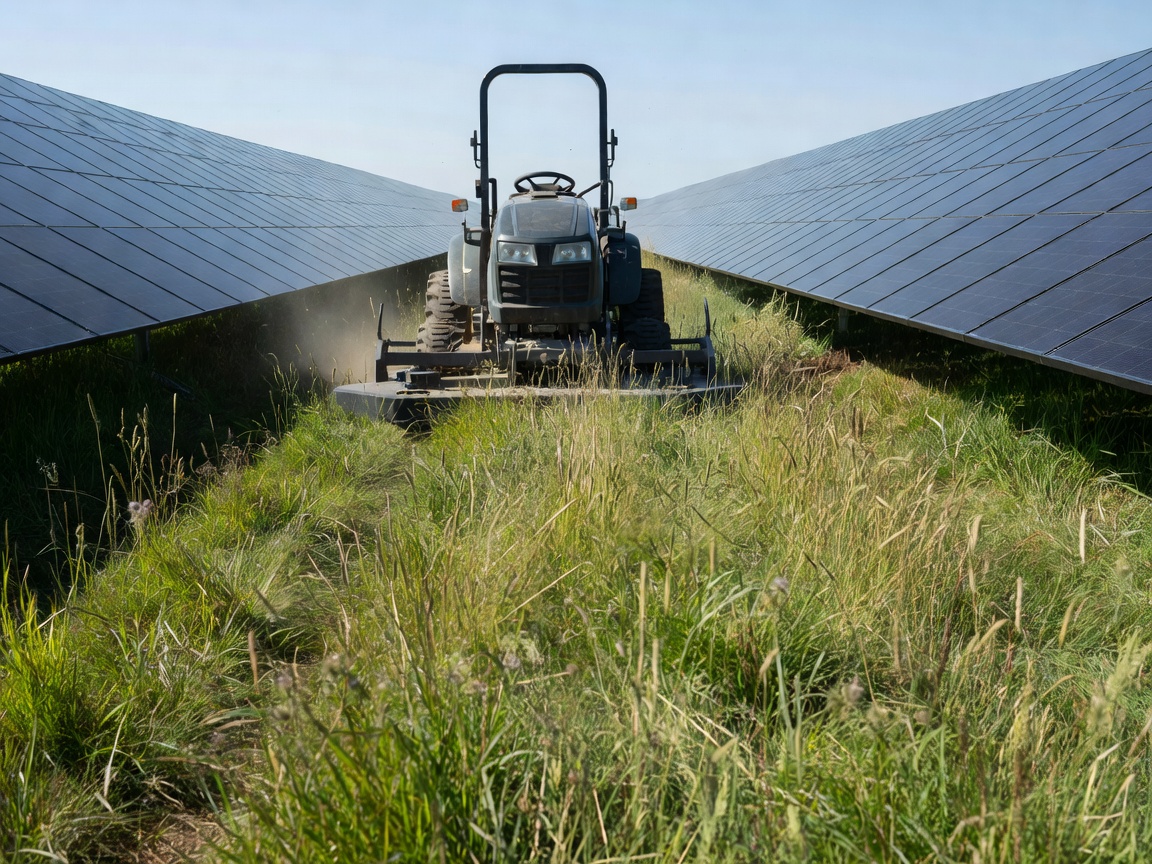
For broad-scale application across most utility-scale sites, mechanical vegetation control remains the most reliable method. Standard agricultural mowing equipment is often too large, too tall, or throws debris too aggressively for use inside a solar array. Therefore, specialized low-profile equipment is generally required.
Row mowing handles the bulk of the vegetation between the panel structures. Operators must be trained to navigate the often narrow corridors, maintaining a steady pace while constantly monitoring clearance. If a site features tracking panels that move throughout the day, mowing schedules and routes must be coordinated to ensure the equipment can pass safely when the panels are in their flattest positions.
Trimming and Targeted Clearance
Tractors and large mowers can only get so close. The spaces directly underneath the panels, around the structural piles, and closely bordering the inverter pads require targeted clearance. This is typically achieved through manual trimming using brush cutters or walk-behind mowers. Trimming is highly labor-intensive but absolutely necessary to prevent localized shading on the lowest cells of the panels, which can significantly drag down the output of an entire string.
Ground-cover management plays a role here. If a low-growing, spreading ground cover is successfully established around the piles, the need for intensive mechanical trimming drops considerably. We look for ways to promote this kind of passive control wherever the environment allows.
Working Safely Around Solar Infrastructure
Working around solar infrastructure demands a heightened culture of safety and precision. The equipment is expensive, electrically live, and easily damaged. Safety considerations aren't just about protecting the operators—they are about protecting the asset. Operators must be acutely aware of exposed grounding wires, low-hanging DC cables, and communication trenches that might not be fully compacted.
Furthermore, environmental considerations must be factored into every pass of the machinery. Operating heavy equipment on saturated ground can cause deep rutting, destroying the soil structure and creating pathways for severe water erosion. If the ground is too wet, mechanical control must be paused. The risk of sliding into a panel structure or ruining the site's drainage profile far outweighs the temporary issue of taller grass.
Require active control services?
Learn how our targeted control strategies can keep your site running efficiently.
Contact Our Team