Solar Site Access Management
A solar farm is only useful if your technicians can actually reach the equipment. We help keep critical site routes clear, visible, and safely navigable year-round.
Securing the Corridors
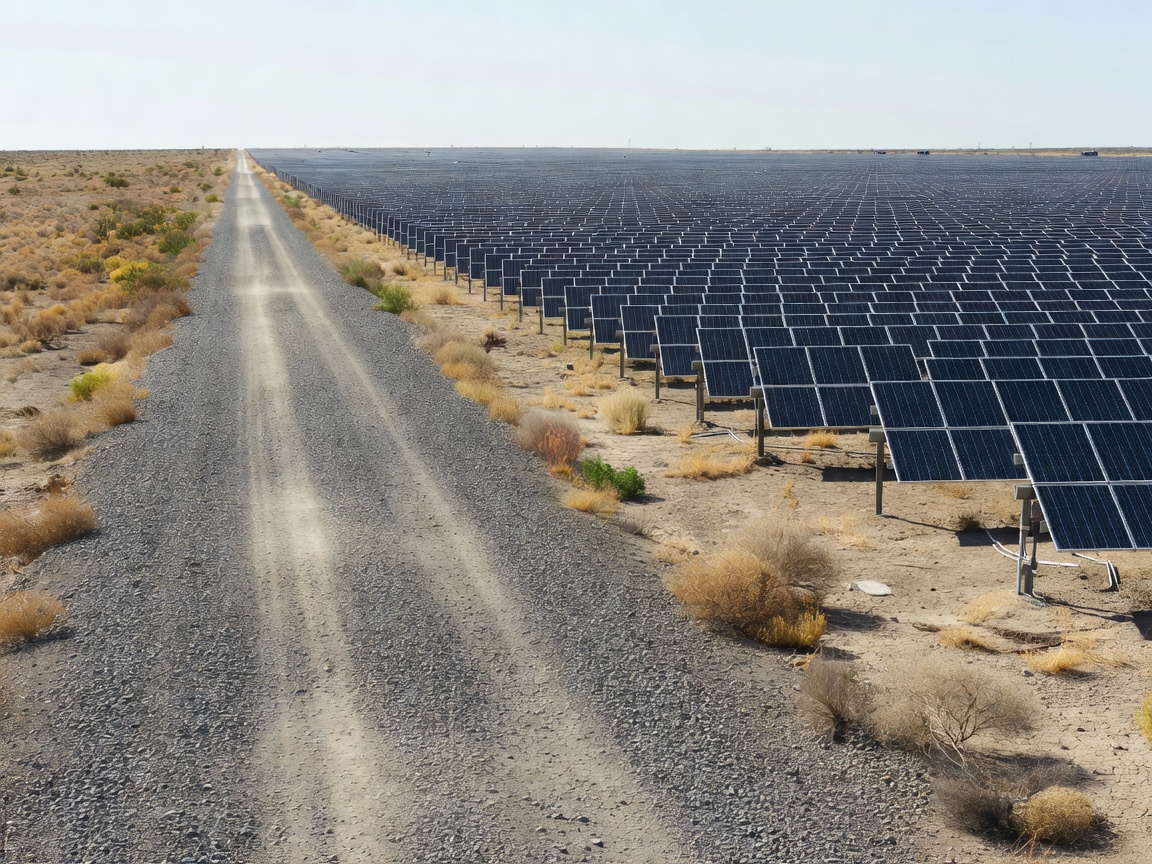
Utility-scale sites are sprawling, often covering hundreds of acres. The network of internal roads and service routes is the lifeline of the operation. If a string inverter goes offline or a panel is damaged by extreme weather, technicians need immediate equipment access. They cannot afford to spend hours clearing brush or getting their service vehicles bogged down in poorly maintained drainage areas.
Vegetation encroachment on these roads happens quickly. Weeds creep onto the gravel from the edges, gradually narrowing the drivable surface. Over time, organic matter builds up, trapping moisture and turning a solid gravel road into a muddy, impassable track. Regular edge maintenance and route clearance are necessary to preserve the integrity of the roadbase.
Visibility and Navigability
Safety is tightly linked to visibility. Tall vegetation on the inside corners of intersections blocks lines of sight, increasing the risk of accidents between maintenance vehicles. Gate approaches must also remain entirely clear. Not only do weeds interfere with the operation of automated security gates, but a clear approach ensures that security personnel or cameras have an unobstructed view of anyone attempting to enter the facility.
Similarly, designated turning areas for large vehicles (like trucks delivering replacement parts or large mowers) must be maintained. If a driver cannot see the edge of the turning pad due to overgrowth, they risk dropping a wheel into a ditch or, worse, backing into an array structure.
Managing Seasonal Access Problems
Access isn't a static challenge; it changes with the calendar. Seasonal access problems can severely hamper site operations. During the rainy season, drainage areas and swales can become choked with rapid plant growth. When drainage fails, roads flood. Keeping these water management features clear of heavy vegetation ensures that water flows away from the roads and the panel foundations as designed.
In drier months, the focus shifts to fire risk. Tall, dry vegetation encroaching on service roads acts as a fuel bridge, potentially allowing a small spark from a vehicle exhaust to spread into the main array. Maintaining wide, clear buffer zones along all internal roads creates vital fire breaks that protect the wider site.
We work to identify the specific access challenges your site faces and apply targeted vegetation control to keep your routes open, visible, and structurally sound no matter the season.
Having trouble navigating your site?
Let's clear the way. Contact us to discuss route clearance and access management.
Contact Our Team